
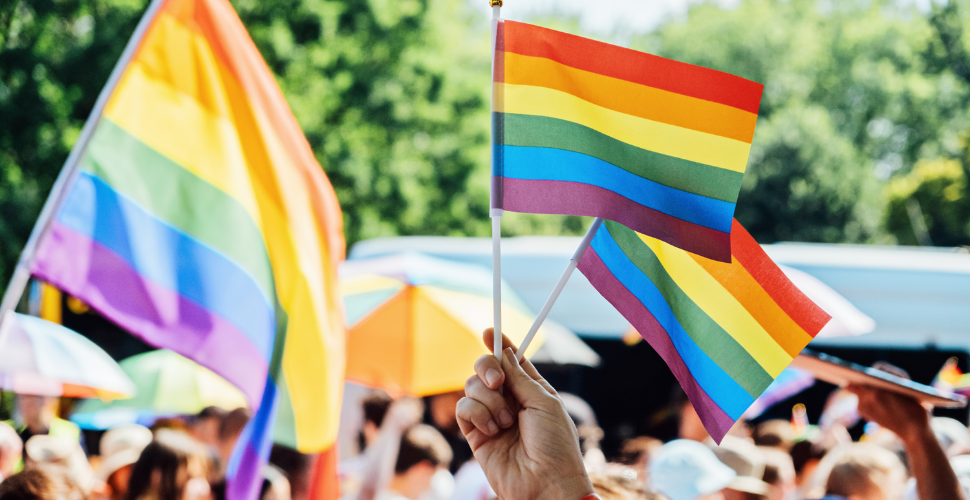
As we near the end of Pride Month, Shani Newbold (Managing Partner at Cadence Partners) shares her thoughts on intersectionality.
Shani is a leading diversity and inclusion campaigner who has devoted her career to re-addressing the balance of diversity within leadership and board appointments.
We’re in an ex-mining town in the East Midlands in the late ’80s / early ’90s. There’s the corner shop on the way to school, with the racial slur daubed across its front door. And here’s the African and Caribbean Centre where we held all the important family gatherings (and where my dual heritage meant I was always one of the fairest).
I’ll never forget hearing my aunt’s voice as she prayed fervently for my uncle: his ‘evil ways were not godly’. Yet fast-forward 20 years and that same aunt was giving my then girlfriend – now wife – the most glorious array of Christmas gifts. There was acceptance, even love, from my aunt – not to mention a bit of arch humour, represented by a bottle of perfume called ‘Lady Love’…!
Our shared need to belong
Belonging is a fundamental human need – a deep-rooted desire to find a place where your whole self is embraced and understood. People (like me) with dual heritage can find a sense of belonging to be especially complex. And compounded with being a gay woman in the East Midlands, the search for a tribe that fully encompasses all aspects of my identity was… well, let’s say a little challenging.
This isn’t to knock the Midlands – a region known for its diverse cultural tapestry. But it’s one that still grapples with the nuances of acceptance and understanding when it comes to intersectional identities. As a dual heritage person, you can feel suspended between multiple worlds, navigating the complexities of different cultural expectations, languages, and traditions. Inspired combinations, like a full Christmas dinner with a side of ackee salt fish and rice, can be joyful; but they can also create a sense of not fully belonging to any single community.
Being a gay woman adds to the layers of self-discovery and acceptance. Like many aspects of identity, sexual orientation is strengthened by affirmation and support from within a community. But in an environment where social attitudes and norms are either less accepting or less overtly supportive, it can be tough.
Finding strength in intersectionality
‘Intersectionality’ describes the ways in which different forms of oppression, such as racism, sexism, homophobia, and classism, intersect with and compound each other. It recognises that individuals are not defined by a single identity or experience. And it reminds us that we must recognise the various forms of oppression that people face to truly understand their experiences and work towards social justice.
As a Black lesbian with strong working-class roots, I’m constantly encountering and navigating these intersections. You may (or may not) be surprised to hear that I have experienced racism within the LGBTQ+ community, and homophobia within the black community. And I’ve been underestimated more times than I can count by my peers.
However, I’ve also found strength and fellowship within the intersections of my identity. I’ve found solidarity with others who share similar experiences, as well as with allies. In my professional life, I’ve worked towards creating spaces that are inclusive and affirming for all marginalised communities.
The yearning for a tribe, a place where you can feel completely seen and understood, is a natural human instinct. It’s crucial to remember that belonging is not solely defined by external factors, but also by embracing yourself and celebrating who you are. And it’s important to recognise that communities can be fluid, evolving, and diverse. As I’ve grown I’ve learnt that my tribe is not merely defined by geography or homogeneity. Rather, it’s built by all the different people, from various walks of life, who appreciate and embrace my complete identity.
Embracing my authentic self
Embracing my dual heritage and being proud of my identity as a gay woman were key for me. They’ve been powerful affirmations that have helped me build resilience and confidence in navigating the world. My advice is to surround yourself with supportive friends, allies, and mentors who champion diversity and understand your unique journey. For me, this was game changing.
By being true to yourself, seeking connections, and embracing your authentic self, you can gradually cultivate a sense of belonging and create your own tribe, made up of people who appreciate and celebrate the beautiful complexity that is uniquely you. Now I look back on those early experiences and the grit they gave me as I became the full person I am today: Black, lesbian, a mother, a business owner, a trustee.
I think Aunty Nettie would be proud.